+2776 329 9403
saisi@instsi.co.za
SAISI Member Area
My Cart
My Account

Tips for Trips

by | Dec 4, 2019

As we head into the holiday season, with many families planning their annual holiday, Sally Fraser-Mackenzie (OT, passionate road-tripper and mother of two busy boys) gives us some do’s and don’ts to prepare as we set out eagerly for our various destinations, so that we don’t arrive battered and bruised but ready for some real R&R.


General Principles of Travelling with small children:

  1. Plan petrol and loo stops carefully – fill up with petrol before the trip. Synchronize sleep time away from stops for food, loo, road work areas (road blocks and stop-and-go’s).
  2. Leave early – all family members are generally better in the morning, rather than the afternoon.
  3. Try and drive away from the sun – west in the morning and east in the afternoon.
  4. Stop for a long healthy, hearty breakfast. Preferably somewhere where there is a large area to run, trampolines, or a touch farm.
  5. Alternate which side of the car the child sits on if possible, so that the seat belt doesn’t keep pressing on the same side of their body for such a long time.
  6. Peg the seat belt higher up so it doesn’t squash their shoulder and irritate them.
  7. Line the car seat with a soft blanket, sheepskin, or pillow (those kids car seats can be really hard).
  8. Use some form of sun visors if necessary, even if just a towelling nappy in the window.
  9. Always have 2 or 3 towelling nappies available in the car. (Sun visors, plate to catch crumbs for Dad’s sandwiches, vomit cloth, soaking up toilet accident, wiping up yogurt, tug of war, cleaning the windscreen, wiping anxiety sweat from your brow!)
  10. At road blocks, if possible, get out, move, visit your neighbours… make friends…
  11. Monitor the children carefully. Change activity BEFORE they get irritated and “go over the edge”. Keep them regulated and settled. Do not, DO NOT let them get beyond themselves and unable to calm. (I speak from the bad kind of experience…)
  12. Approach the trip as an adventure, and something positive and exciting. Don’t let the kids get wind that you are terrified! (It does get better with age!)

What NOT to do:

  • Activities with small parts (potential for: choking hazards; lost forever; jam up the air-vent/seat belt)
  • Sticky juices (stick to water).
  • Yogurt (gets everywhere)
  • Sugary snacks (if your child responds badly to sugar).
  • Sugary snacks (if you do regular long trips).

GOOD Activities to do:

  • Having boxes or bags of various activities to pull out at different stages.
  • Box of fiddles: bubblewrap, scooby wire, pipecleaners, elastic bands, Prestik.
  • ZipLoc Bag (sealed with tape) or something stronger filled with rice and small objects (beads, plastic bugs, paperclips, matches, etc), then child must find the objects. Some children will tend to make holes and push small bits through and make wonderful mess.
  • Balloons on sticks. Balloons off sticks. Balloons on a string.
  • Squashy squeezy stress balls – Commercially available or you can stuff balloons with play dough, rice, seeds, maizena, flour, sand, cotton wool. Can put another balloon around the first for extra strength.
  • Shop at Crazy Stores (Or Mr Price Home) before trip for bits and bobs – bringing out a novel toy may save the day. Keep a few surprises.
  • Buy them a new small toy animal, vehicle, man to play make believe with, make a story with.
  • Books – touchy feely ones are always good.
  • Music – sing-a-long songs, action songs, bring out a few musical instruments – shakers, castinets. (Don’t have music on the whole time. Put it on in bursts, have it loud, enjoy it, then turn it off).
  • Wrapping up all these kinds of things you would give them anyway (snack, toy, book), then when they have to find e.g. a windmill, then they can open one thing.
  • Sticker books
  • Snacks – popcorn, chewing gum, carrots, pickles, cucumber, dried mango, savoury biscuits, rice cakes, fruit rolls, liquorice, wine gums, jelly babies (try and keep sugary snacks as last resort).
  • Thread an Otee/Cherrio necklace, then eat one by one.
  • Magnetic drawing boards
  • Blow activities: noiseless whistles, mouth organs
  • Suck activities: long straw with a Yogisip
  • Weighted blankets to help calm them, or help them sleep longer
  • Attach a polystyrene bag on their laps as a work station so they have something to put their sticker book on.
  • Simple games – “I spy” with colours

For the older ones:

  • DVD’s (works particularly well for children who don’t have TV at home, like mine – as it is such a treat! – we did a 900km trip through the Karoo (7 movies) and they didn’t even ask when are we going to get there!)
  • Ipods (especially if your kids are different ages, and have different needs)
  • Audio books
  • Verbal Games – I spy, find the next red car, etc.
  • Magnetic board games – noughts and crosses
  • Activity pads with wipe off markers
  • Etch a Sketch
  • Library books they haven’t seen before
  • Where’s Wally, or puzzle books
  • Sing-a-long Music (Queen played very loudly is a firm favourite in our car, and James Taylor!)

To Prevent car sickness and vomitting –

  1. Don’t let them scream so much they vomit. Stop the car. Get out, have a break, anywhere. It is worth it! (I know)
  2. Ginger helps – Ginger teas, ginger biscuits, candied ginger.
  3. Ice blocks held in the palm of the hand or rubbed on soles of the feet.
  4. Suck an ice block (don’t choke on it).
  5. Heavy pressure to the head – Joint compressions through the neck.
  6. Let the child sit on a booster seat in front to watch the road. Or in the middle at the back.
  7. Choose your activities so child is not looking down.
  8. Play lots of “I spy” and talking about the environment, and listen to music.
  9. Sea bands – available from pharmacies.

And lastly – if these don’t work – maybe consider a staycation 🙂

With thanks to Jenni Saunders, Kate Bailey, Michelle Luyt, Ray-Anne Cook and Janet Michaelides – some creative and inspirational mothers and therapists!

Blog Author

Recent posts

Browse the past Blog posts

Related blogs

Autism in Focus 2026: Looking Beyond What We See

Different perspectives, fresh insights and a reminder that there’s always more to learn.
What does it really mean to understand an autistic child? Is it about recognising certain behaviours, knowing the diagnostic criteria, or finding the right therapeutic approach? Or is it about something much bigger?

On 16 and 17 October 2026, the South African Institute for Sensory Integration (SAISI) hosted Autism in Focus 2026, a two-day online event bringing together therapists, healthcare professionals, parents and teachers to explore autism from different perspectives.

And what a variety of perspectives there were! From sensory integration, communication and DIRFloortime® to anxiety, demand avoidance, feeding, medical research and self-advocacy, there was plenty to think about.

But perhaps one of the most valuable messages was surprisingly simple: sometimes we need to stop focusing on what a child is doing and start wondering why.

There’s Always More Behind the Behaviour

We’ve all encountered a child who refuses an activity, struggles with transitions or becomes overwhelmed by something that seems relatively small. Our first instinct might be to ask, “How do we get this child to cooperate?”

But what if we asked a different question? What if we asked, “What is this child trying to tell us?”
Emma Wijnberg explored autism through a sensory integration lens, while Elize Janse van Rensburg’s presentation on anxiety, autonomy and demand avoidance encouraged consideration of the demands children face.

A child who refuses an activity might be anxious. A child who runs away might be overwhelmed by sensory input. A child who repeatedly asks the same question might simply be looking for reassurance.

The behaviour is what we see. Understanding what lies beneath it is where meaningful support begins.

One of the most powerful concepts highlighted in the event’s educational material was the invisible load autistic children may carry throughout their day. Imagine a child arriving at school with an empty backpack. Throughout the day, we add a book for every demand: classroom noise, social expectations, following instructions, managing transitions, concentrating and coping with unexpected changes.

By home time, that schoolbag is pretty heavy!

Yet, from the outside, the child may appear to have had a perfectly good day. Some children with Autism also mask their difficulties, working incredibly hard to fit in, follow expectations and appear as though they are coping.

And then they get home.

The tears start. The frustration spills over. Perhaps there’s a meltdown over something seemingly insignificant. But was it really about that small thing? Or was it the weight of everything that came before it? It leaves us with a question worth remembering:

Instead of asking, “Can this child cope?”, perhaps we should ask, “What is it costing them to cope?”

Different Approaches, One Child

What made Autism in Focus particularly interesting was the variety of professional perspectives.

Jessie-Anne Bird explored the identification of autism and SPELL principles, while Belinda von Wielligh introduced the relationship-based DIRFloortime® approach, reminding us of the importance of connection and meaningful play. Dr Gina Rencken provided a perinatal perspective on autism and early neurodevelopment.

Rochelle Thanjan highlighted neurodiversity-affirming communication, while
Kath Megaw explored feeding differences, sensory regulation and gut–brain links.
The programme also ventured into medical territory, with Dr Nerica Ramsundhar discussing emerging research involving leucovorin, and Prof Wattie Janse van Rensburg addressing the ethics of genetic testing.

Dr Andy Hoffmeyer discussed medication as a possible support for neurodivergent children, while Jessica Jansen van Rensburg considered low-demand parenting and the use of visual schedules.

Another important contribution came from Dr Emile Gouws, who brought the conversation back to autistic voices, self-advocacy and the broader neurodiverse community. He shared his own experiences as a young non-verbal child who was later diagnosed on the autism spectrum.

There were so many different perspectives, yet all encouraging us to see the child as more than a diagnosis or a collection of challenges, because there is no single approach that fits every autistic child. Understanding the individual will always matter.

Not every professional development event needs to introduce something completely new. Sometimes, hearing a familiar idea explained differently is enough to make us reconsider how we approach our work. This was beautifully captured by therapist Serna Smit, who shared:

“Autism in Focus was a valuable and inspiring event. Although not all the information was new, it encouraged me to reflect on my therapeutic approach and reignited my passion for learning. The discussions on PDA, diagnosis and Floortime were particularly insightful.
The online format was convenient, the cost affordable, and the CPD points an added bonus! Access to the presentation slides afterwards would have been appreciated.
Overall, a wonderful reminder that even experienced therapists always have something new to learn!”

And isn’t that exactly what professional development should do?

The convenient online format, affordable cost and CPD accreditation made the event accessible, while the opportunity to revisit familiar concepts through different lenses added real value.

Taking It Back to the Children

At the end of the day, the value of an event like Autism in Focus lies in what we take back into our therapy rooms, classrooms and homes. Perhaps it’s being a little more curious before responding to a child’s behaviour. Perhaps it’s recognising that the child who looks perfectly fine at school might be working harder than we realise. Or perhaps it’s remembering that connection, predictability, autonomy and feeling understood can be just as important as the skills we’re trying to teach.

Our goal shouldn’t simply be children who look as though they’re coping. It should be children who genuinely feel safe, supported and understood.

Autism in Focus 2026 was a valuable opportunity to reflect, reconsider and keep learning. Because whether we’ve been practising for two years or twenty, there is always something more to discover about the children we support.

And sometimes, a small change in how we look at a child can make a big difference in how we support them.

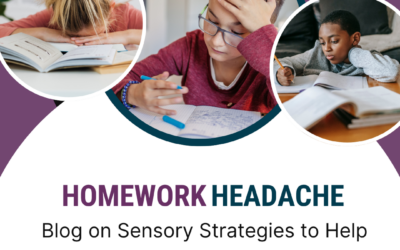
Homework Headache: 

Homework Headache: 

Sensory Strategies to Help  Homework time can be difficult for many families. Your child may leave the table constantly, rock on his or her...