The South African Association for Child and Adolescent Psychiatry and Allied Professions (SA-ACAPAP) 2026 Congress brought together professionals across disciplines – psychiatry, psychology, paediatrics, paediatric neurology, neurodevelopment and allied health, in a shared commitment to better understanding child and adolescent mental health.
For SAISI, it was both a privilege and a proud moment to be part of this space, contributing a sensory integration perspective to important, evolving conversations around children, families, and development.
SAISI was represented across a number of presentations, each offering a unique but interconnected perspective on mental health through a sensory integration lens.
Harnessing the Playful Power of F-Words in Child Mental Health
Dr Gina Rencken
Gina’s presentation brought a refreshing and hopeful perspective, highlighting how the F-words framework, functioning, family, fitness, fun, friends, and future, can be meaningfully applied within clinical practice. Her work emphasised participation, strengths, and playfulness, aligning beautifully with a child-centred, occupation-based approach to mental health.
More Than Clumsy: The Emotional Toll of DCD – A Sensory Integration Perspective
This presentation formed part of a multidisciplinary symposium, bringing together different professional lenses on DCD.
From a sensory integration perspective, the focus was on what sits beneath the motor difficulties, particularly challenges in tactile and proprioceptive processing, and how these contribute not only to praxis difficulties, but to the emotional experiences of the child.
Children with DCD are not just “clumsy.”
They are often navigating repeated failure, unpredictability in their bodies, and a growing sense of anxiety and self-doubt.
This symposium created a powerful space for shared understanding across disciplines -something that is so needed in supporting these children holistically.
Reaching the Child Who Won’t Reach Back
Emma Wijnberg
This talk explored children who present as withdrawn, avoidant, or difficult to engage.
Through a sensory lens, it reframed these behaviours, not as unwillingness, but as neurophysiological inaccessibility for connection.
When we understand that a child may not be able to reach back, rather than choosing not to, it fundamentally shifts how we respond: from pressure to connect, to creating safety for connection to emerge.
The ADHD–Emotions Connection
Emma Wijnberg
This presentation unpacked the relationship between sensory processing, arousal, and emotional regulation.
It highlighted how “big emotions” and behavioural outbursts are often rooted in difficulties with modulation and state regulation, offering a more compassionate and neurodevelopmentally informed understanding of behaviour.
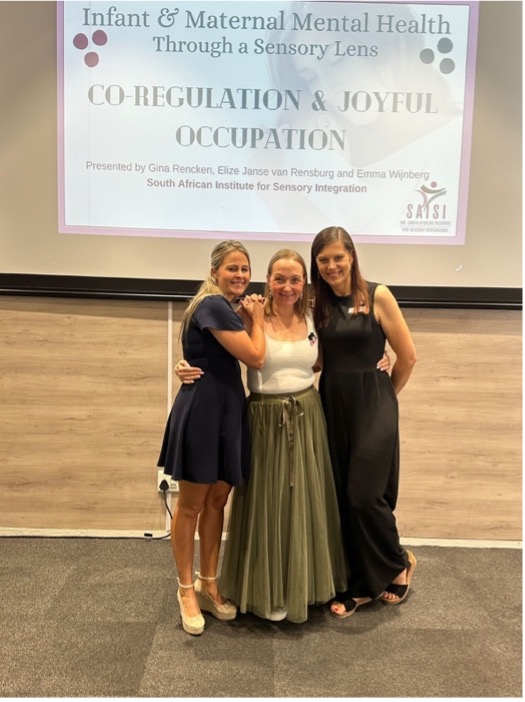
Infant & Maternal Mental Health Through a Sensory Lens: Co-Regulation & Joyful Occupation
Dr Gina Rencken, Elize Janse van Rensburg, and Emma Wijnberg
This was presented as a full morning workshop, allowing for deeper engagement with the topic.
The session explored the sensory foundations of early development, co-regulation, and relational health, emphasising how mental health begins in relationship.
It highlighted the role of shared regulation, embodied connection, and joyful occupation in shaping both infant and maternal wellbeing, offering practical and meaningful insights for clinicians working in early intervention.
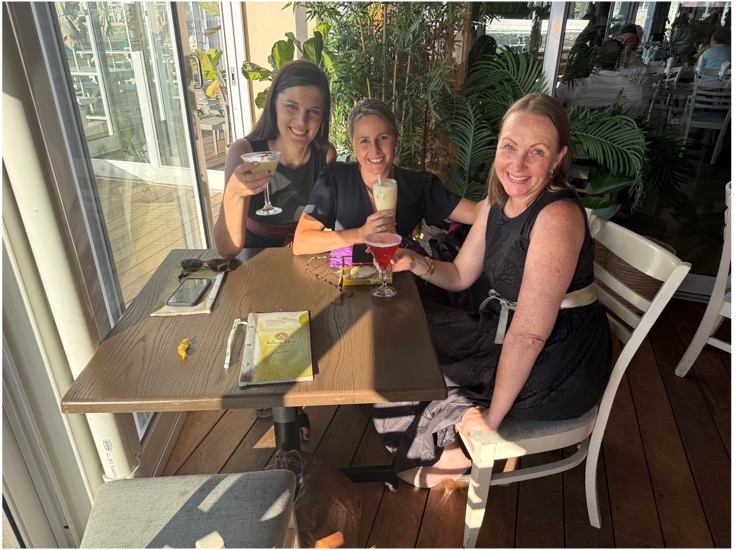
One of the highlights of the congress was the recognition of Dr Gina Rencken, who was awarded the SAISI Grow Award.
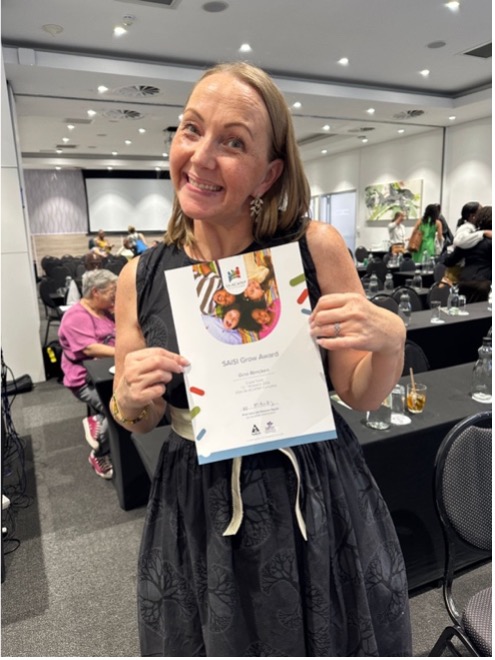
This award speaks not only to Gina’s contribution to the field, but to her commitment to growing sensory integration within South Africa, through teaching, research, and clinical excellence.
It was a very special moment for the SAISI team to celebrate together.
Across all presentations, a clear message emerged:
Children’s behaviours are not random.
They are rooted in how their nervous systems are processing and responding to the world.
A sensory integration lens allows us to:
- Look beneath behaviour to underlying neurophysiology
- Understand dysregulation as adaptive, not oppositional
- Support children through meaningful, experience-based intervention
Importantly, this lens does not stand in isolation; it strengthens multidisciplinary collaboration, enriching how we understand and support children across contexts.
SA-ACAPAP reminded us of the importance of integrated, relational, and developmentally informed care.
We are incredibly proud of SAISI’s contribution to this space, and of the growing recognition that sensory integration is not peripheral to mental health, but often central to it.