+2776 329 9403
saisi@instsi.co.za
SAISI Member Area
My Cart
My Account

A Mother’s Journey with a Congenital Heart Disease baby

by | Feb 10, 2024

Written by Lelani Groenewald

My Journey as a First-Time Mother to a Child with Transposition of the Great Arteries (TGA)

As I saw my newborn son straight after my planned C-section, I couldn’t have imagined the rollercoaster journey that awaited us. I had become a first-time mother to a baby with a life-threatening heart condition – Transposition of the Great Arteries. Little did I know that my precious baby would undergo open-heart surgery at just 6 days old, and I would have to say goodbye to him as he was taken to theatre, not knowing if I would ever see him alive again.

The world as I knew it turned upside down when, shortly after his birth, we received the devastating diagnosis. Our beautiful baby boy had a heart defect that required immediate intervention. Transposition of the Great Arteries meant that his pulmonary and aortic arteries were switched, preventing his blood from being oxygenated properly. It was a terrifying moment as we faced the reality that our child’s life hung in the balance. With heavy hearts, we handed our tiny warrior over to the skilled hands of the surgical team. The hours that followed were agonising, as we waited for news of his condition. Every beep of the phone sent shivers down our spines, and every step toward the hospital felt like an eternity. Saying goodbye to our precious newborn was a painful experience, not knowing if it would be the last time we would see him smile.

Our son’s open-heart surgery was a success, but the challenges were far from over. He spent an entire month in the Neonatal Intensive Care Unit (NICU), battling complications and struggling to be extubated. Those days were marked by anxiety, fear, and an overwhelming desire to be with our fragile baby. During that month in the NICU, our world revolved around the beeping monitors, the steady rhythm of our baby’s heart, and the countless hours we spent by his side. We watched as he fought for every breath, as his tiny body grew stronger day by day. We spent as much time as possible with him, reading stories and offering words of encouragement, hoping and praying that we would one day take him home.

The moment we were finally able to hold our baby without tubes and wires was nothing short of miraculous. We knew we had turned a corner on this harrowing journey. As he continued to recover and grow, our hope for a brighter future strengthened. The support from the incredible medical team and the love of family and friends sustained us through the darkest hours.

Today, our son is a healthy 14-year-old boy with a clean bill of health, no medications, and a future filled with boundless possibilities. It’s a testament to his strength, the dedication of the medical professionals who cared for him, and the unwavering love and resilience of our family. We didn’t receive the diagnosis during pregnancy; we were blindsided only a few hours after his birth. But we have learned that life can be unpredictable, and it’s our response to adversity that defines us. Our journey as first-time parents to a child with Transposition of the Great Arteries was filled with challenges, but it also revealed the incredible power of the human spirit and the capacity for hope in the face of uncertainty. We cherish every day with our son and never take his good health for granted. Our experience has taught us to treasure the simple joys of life, and to have faith that even in the darkest moments, there is a light at the end of the tunnel.

Blog Author

Recent posts

Browse the past Blog posts

Related blogs

Autism in Focus 2026: Looking Beyond What We See

Different perspectives, fresh insights and a reminder that there’s always more to learn.
What does it really mean to understand an autistic child? Is it about recognising certain behaviours, knowing the diagnostic criteria, or finding the right therapeutic approach? Or is it about something much bigger?

On 16 and 17 October 2026, the South African Institute for Sensory Integration (SAISI) hosted Autism in Focus 2026, a two-day online event bringing together therapists, healthcare professionals, parents and teachers to explore autism from different perspectives.

And what a variety of perspectives there were! From sensory integration, communication and DIRFloortime® to anxiety, demand avoidance, feeding, medical research and self-advocacy, there was plenty to think about.

But perhaps one of the most valuable messages was surprisingly simple: sometimes we need to stop focusing on what a child is doing and start wondering why.

There’s Always More Behind the Behaviour

We’ve all encountered a child who refuses an activity, struggles with transitions or becomes overwhelmed by something that seems relatively small. Our first instinct might be to ask, “How do we get this child to cooperate?”

But what if we asked a different question? What if we asked, “What is this child trying to tell us?”
Emma Wijnberg explored autism through a sensory integration lens, while Elize Janse van Rensburg’s presentation on anxiety, autonomy and demand avoidance encouraged consideration of the demands children face.

A child who refuses an activity might be anxious. A child who runs away might be overwhelmed by sensory input. A child who repeatedly asks the same question might simply be looking for reassurance.

The behaviour is what we see. Understanding what lies beneath it is where meaningful support begins.

One of the most powerful concepts highlighted in the event’s educational material was the invisible load autistic children may carry throughout their day. Imagine a child arriving at school with an empty backpack. Throughout the day, we add a book for every demand: classroom noise, social expectations, following instructions, managing transitions, concentrating and coping with unexpected changes.

By home time, that schoolbag is pretty heavy!

Yet, from the outside, the child may appear to have had a perfectly good day. Some children with Autism also mask their difficulties, working incredibly hard to fit in, follow expectations and appear as though they are coping.

And then they get home.

The tears start. The frustration spills over. Perhaps there’s a meltdown over something seemingly insignificant. But was it really about that small thing? Or was it the weight of everything that came before it? It leaves us with a question worth remembering:

Instead of asking, “Can this child cope?”, perhaps we should ask, “What is it costing them to cope?”

Different Approaches, One Child

What made Autism in Focus particularly interesting was the variety of professional perspectives.

Jessie-Anne Bird explored the identification of autism and SPELL principles, while Belinda von Wielligh introduced the relationship-based DIRFloortime® approach, reminding us of the importance of connection and meaningful play. Dr Gina Rencken provided a perinatal perspective on autism and early neurodevelopment.

Rochelle Thanjan highlighted neurodiversity-affirming communication, while
Kath Megaw explored feeding differences, sensory regulation and gut–brain links.
The programme also ventured into medical territory, with Dr Nerica Ramsundhar discussing emerging research involving leucovorin, and Prof Wattie Janse van Rensburg addressing the ethics of genetic testing.

Dr Andy Hoffmeyer discussed medication as a possible support for neurodivergent children, while Jessica Jansen van Rensburg considered low-demand parenting and the use of visual schedules.

Another important contribution came from Dr Emile Gouws, who brought the conversation back to autistic voices, self-advocacy and the broader neurodiverse community. He shared his own experiences as a young non-verbal child who was later diagnosed on the autism spectrum.

There were so many different perspectives, yet all encouraging us to see the child as more than a diagnosis or a collection of challenges, because there is no single approach that fits every autistic child. Understanding the individual will always matter.

Not every professional development event needs to introduce something completely new. Sometimes, hearing a familiar idea explained differently is enough to make us reconsider how we approach our work. This was beautifully captured by therapist Serna Smit, who shared:

“Autism in Focus was a valuable and inspiring event. Although not all the information was new, it encouraged me to reflect on my therapeutic approach and reignited my passion for learning. The discussions on PDA, diagnosis and Floortime were particularly insightful.
The online format was convenient, the cost affordable, and the CPD points an added bonus! Access to the presentation slides afterwards would have been appreciated.
Overall, a wonderful reminder that even experienced therapists always have something new to learn!”

And isn’t that exactly what professional development should do?

The convenient online format, affordable cost and CPD accreditation made the event accessible, while the opportunity to revisit familiar concepts through different lenses added real value.

Taking It Back to the Children

At the end of the day, the value of an event like Autism in Focus lies in what we take back into our therapy rooms, classrooms and homes. Perhaps it’s being a little more curious before responding to a child’s behaviour. Perhaps it’s recognising that the child who looks perfectly fine at school might be working harder than we realise. Or perhaps it’s remembering that connection, predictability, autonomy and feeling understood can be just as important as the skills we’re trying to teach.

Our goal shouldn’t simply be children who look as though they’re coping. It should be children who genuinely feel safe, supported and understood.

Autism in Focus 2026 was a valuable opportunity to reflect, reconsider and keep learning. Because whether we’ve been practising for two years or twenty, there is always something more to discover about the children we support.

And sometimes, a small change in how we look at a child can make a big difference in how we support them.

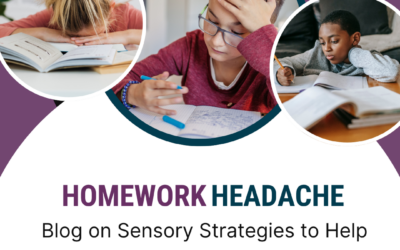
Homework Headache: 

Homework Headache: 

Sensory Strategies to Help  Homework time can be difficult for many families. Your child may leave the table constantly, rock on his or her...