Written by Stefanie Kruger (Occupational therapist, special interest in Ayres Sensory Integration® and cochlear implants) and Brenda Schmid (Paediatric Aural Rehabilitation Specialist, Whispers Speech and Hearing Centre).
The sense of sound allows us to connect to the world around us. When auditory signals are not clear, intermittent or completely absent, this interferes with development, learning, participation and enjoyment in life. During deaf awareness month, let’s reflect on our ability to appreciate our sense of sound, and what can be done to support those who do not have access to sound.
In the context of Ayres Sensory Integration (ASI®), the vestibular, proprioceptive and tactile systems are referred to as the body-centred senses which form the cornerstones of intervention. Ayres referred to sound, smell and vision as distance receptors that provide feedback from the environment around us. Auditory-language functions can be described as “end products” of sensory integration. While Ayres (1972) acknowledged the link between the auditory and vestibular systems, she was particularly interested in the significant number of non-language sounds that are processed in the brainstem and midbrain (together with the integration of other sensory inputs). She understood that the auditory system could potentially provoke a powerful way into the nervous system (Frick and Young, 2009).
Schafer (1994) referred to audition as “touch at a distance” and noted that “hearing and touch meet where the lower frequencies of audible sound pass over to tactile vibrations”. They auditory system is less acknowledged and can be described as the “missing link” in sensory integration (Frick and Young, 2009).
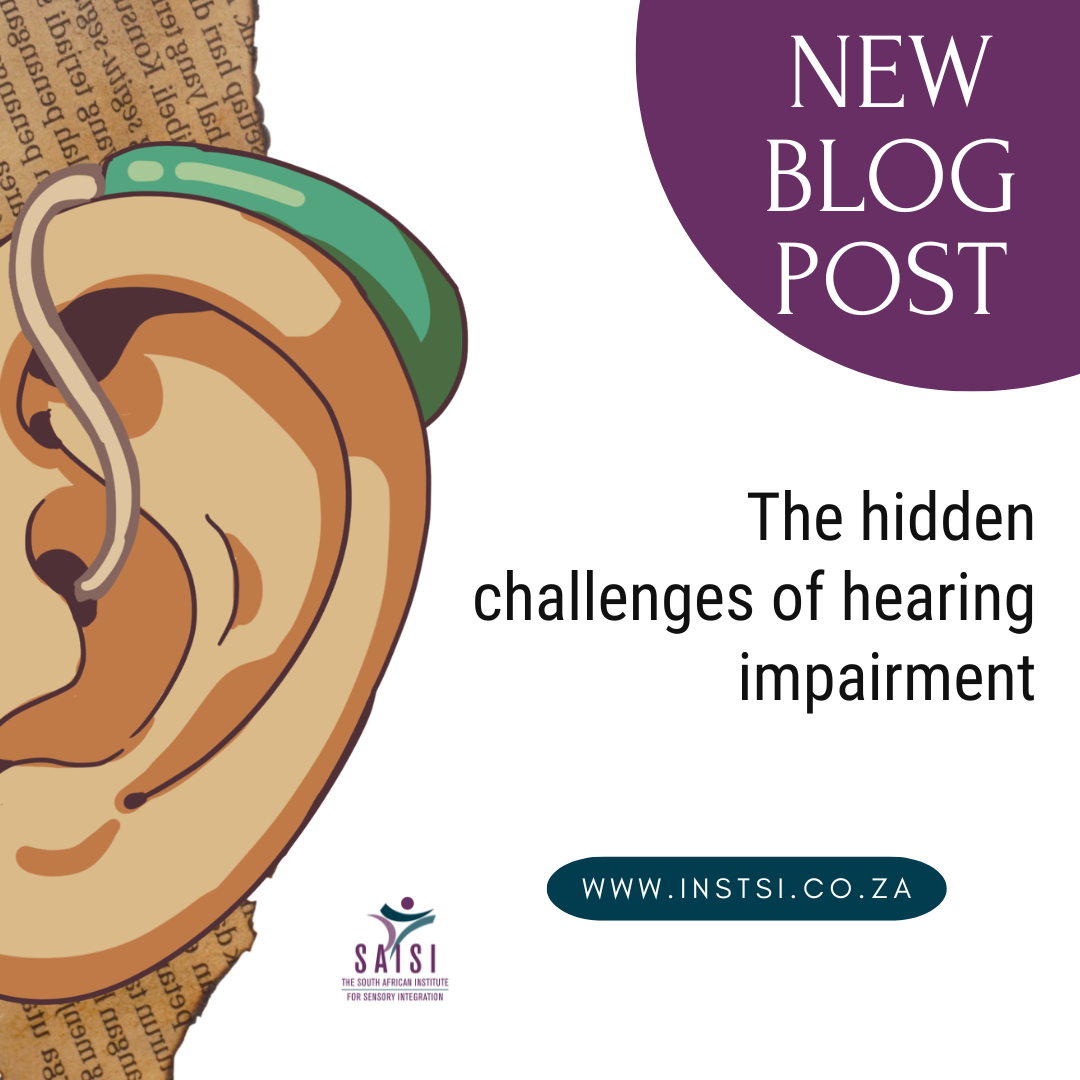
People living with hearing impairment do not have access to sound or receive faint or intermittent signals. They experience hidden challenges that can deeply affect their daily life beyond language and communication difficulties. On the surface they may appear “normal”. They are not in wheelchairs, nor do they display other visible clues that they require support, and hearing impairment can therefore be described as a so-called “hidden handicap”. The assumption that they appear “normal” can lead to feelings of pressure to “perform normally” in a hearing world. Hearing impairment can potentially lead to social isolation, compromised scholastic progress, or reduced work participation which can be extremely emotionally taxing.
Hearing Out Loud advocates for people with hearing loss and the people who love them. In a recent Instagram post, they shared lived experiences of what people with hearing loss wish we knew. Here are two powerful messages: “I hear you, I just didn’t catch all of it. That is not the same as not listening”; and “When everyone laughs and I don’t know why, it is the loneliest feeling in the room”.
Understanding hearing impairment as a complex health issue is essential to address its broad impact on the quality of life (Jansen, 2025). Hearing loss can be frustrating for those who have it, as well as their loved ones, acknowledging the far-reaching impact. There is also an increase in evidence that hearing loss is associated with poor balance, compromised depth perception and secondary mental health conditions such as anxiety, depression or dementia. The rehabilitation process is ongoing throughout the different seasons of life, with added financial burdens (e.g. device maintenance, regular mappings, continued therapeutic support).
Hearing loss ranges from mild to profound, can be temporary or permanent, and may be present in one or both ears. Hearing technology like hearing aids, cochlear implants or bone conduction aids can open the world of sound for appropriate candidates. In addition, other assistive listening devices like FM systems or remote microphones can enhance the quality of the individual’s listening experience in group situations, such as in a classroom, boardroom, birthday party or restaurant. Although they are grateful for this modern breakthrough, it comes a cost. There are additional challenges that they face that often leave them physically, emotionally and mentally exhausted at the end of a typical day. Listening attentively to understand and to respond appropriately, is exhausting. This listening fatigue in individuals with hearing impairment is often overlooked.
Adults have words and can describe their experiences. On the other hand, children are struggling to understand their feelings and don’t have the words to express themselves. Their means of communication is though their behaviour and they often resort to “showing” others their discomfort. These behaviours are sometimes labelled as naughty, aggressive or disobedient. It is clear that these children can easily be misunderstood.
Listening or auditory fatigue is described as exhaustion caused by prolonged listening, especially when trying to decipher speech in noisy environments with competing sensory signals. It occurs when the brain experiences intense strain to process sounds and drains energy that normally goes to focus and memory. It often involves high cognitive loads, which can lead to headaches, irritability, and temporary sensitivity to sound. People experiencing auditory fatigue are known to crave quiet periods to reset their focus and may resort to removing their devices for a short period of time. This self-regulation strategy can be described as an auditory break (or auditory time-out) to assist with managing the cumulative impact of multi-sensory input over the course of a day.
In the context of ASI®, we can describe and articulate the hidden challenges such as sensory overload. It is our responsibility to empower our clients, so they can implement strategies to manage big feelings, or structure the environment appropriately.
Individuals with hearing impairment have a lot to say to those who are willing to listen. They deserve to be heard in a safe space and receive the support needed to reach their optimal potential and lead meaningful lives. It is important to consider strong and vulnerable individual sensory systems, as well as the impact of broken sensory signals on the total person. Early identification and intervention are critical for optimising the window of development and future progress. Let’s take hands with the multi-disciplinary team and create awareness that occupational therapists can also make a valuable contribution in the lives of individuals with hearing impairments.